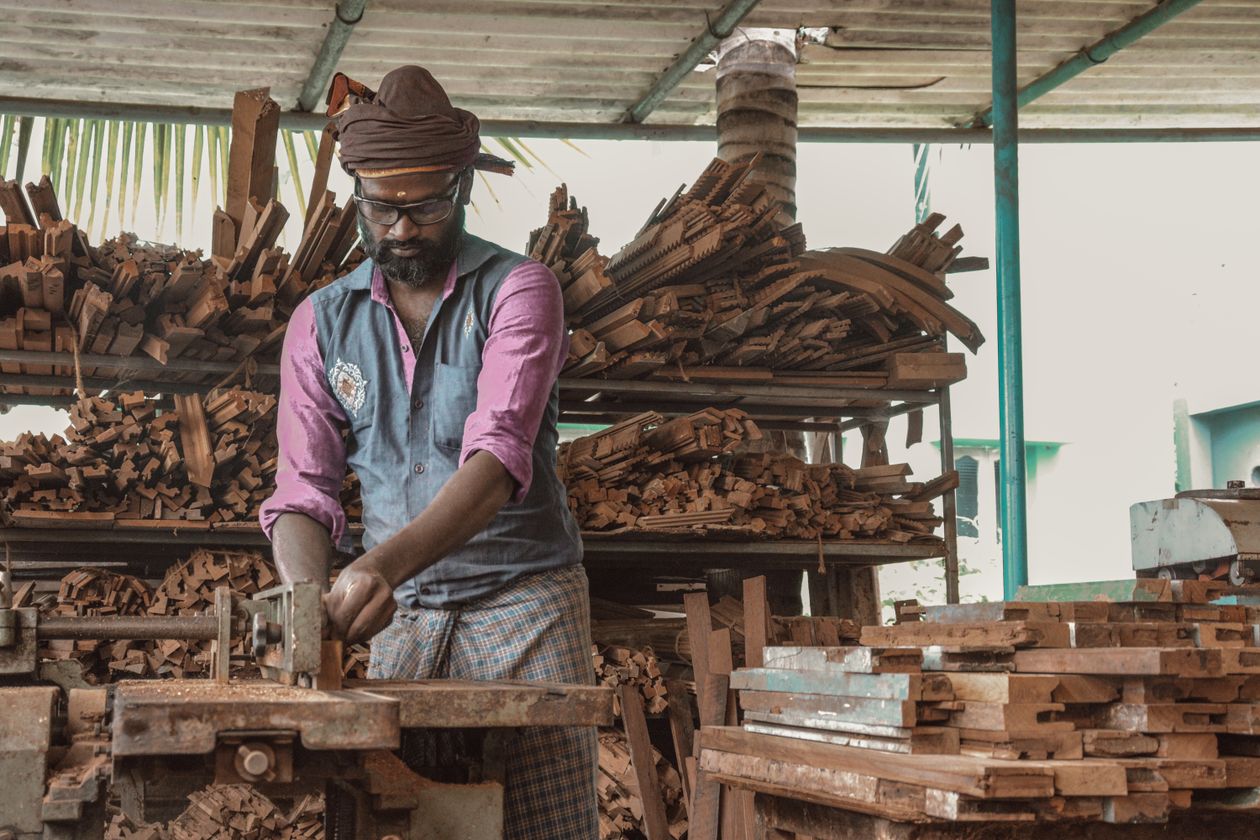
The way pieces of wood are joined together says more about a piece of furniture’s lifespan than almost anything else. Here is a simple introduction to the wood joinery techniques that separate furniture built to last from furniture built to be replaced.
Table of Contents
Mortise and Tenon
One of the oldest and strongest of all wood joinery techniques, a mortise and tenon connects two pieces by fitting a projecting tongue, the tenon, into a matching slot, the mortise. It is commonly used in chair and table frames, and when done well, it can outlast the wood around it.
Dovetail Joints
Recognizable by their interlocking, fan-shaped fingers, dovetail joints are prized for their strength under tension, which makes them a common choice for drawers that get pulled and pushed thousands of times over a piece’s life.
Dowel Joints
Dowels are small wooden pins that reinforce a joint, often used alongside glue. Among wood joinery techniques, dowels are faster and less expensive to produce than dovetails or mortise and tenon joints, and while a well-made dowel joint can still be sturdy, it generally is not as durable over decades of use.
Why It Matters
Furniture held together primarily with staples, nails, or glue alone tends to loosen and fail much sooner than furniture built with interlocking joints. The next time you are evaluating a piece, take a moment to look at how the corners are constructed. Our buyer’s checklist for solid wood furniture covers what to look for in more detail.
Good wood joinery techniques are largely invisible once a piece is finished, but they are the reason a well-made table can be passed down for generations while a poorly made one ends up on the curb within a few years. To go deeper into the craft behind it, see our guide on woodworking and crafting techniques.
What is the strongest wood joinery technique?
Mortise and tenon joints are widely considered one of the strongest wood joinery techniques, especially in chair and table frames, and can outlast the surrounding wood when made well.
Are dowel joints bad?
Not necessarily. Dowel joints are faster and cheaper to produce than dovetails or mortise and tenon joints and can still be sturdy, but they generally do not hold up as well over decades of heavy use.
How can I tell what joinery a piece of furniture uses?
Look closely at the corners of drawers and frames. Dovetails show visible interlocking fan-shaped fingers, mortise and tenon joints are usually hidden inside a frame, and dowel joints often show small round plugs on the surface.